عن المجلة
مجلة اقتصاديات شمال إفريقيا مجلة علمية دورية متخصصة محكّمة تصدر عن جامعة حسيبة بن بوعلي بالشلف- الجزائر، تأسست المجلة سنة 2004، و هي تسعى لتكون مجلة اقتصادية دولية نموذجية بفعل الحرص الدائم على تطويرها و بفعل مساهمات السادة الأساتذة و الباحثين، تهتم بنشر البحوث والمواضيع الاقتصادية الأصيلة، التي تشغل الفكر الإقتصادي وتطوراته، و هي مفتوحة لنشر بحوث الأساتذة والباحثين من مختلف الجامعات و مراكز البحث والدوائر الأكاديمية، باللغات العربية والفرنسية والإنجليزية، كما تهتم بنشر المعطيات الإقتصادية عربيا و إقليميا ودوليا، و كل ما يساهم في الثقافة الإقتصادية. يسهر على إدارتها و تحكيم الاعمال المقدمة لها عدد لا باس به من الباحثين و الخبراء في شتى مجالات العلوم الاقتصادية و التجارية و علوم التسيير.من داخل الجزائر و من خارجها. انتقلت دوريتها من إصدار عددين في السنة الى اصدار ثلاثة أعداد في السنة ابتداء من سنة 2020 ، و النشر في المجلة مجانا.
العدد الحالي
مجلد 22 عدد 41 (2026): Vol. 22 No. 41 (2026): Journal of North African Economies
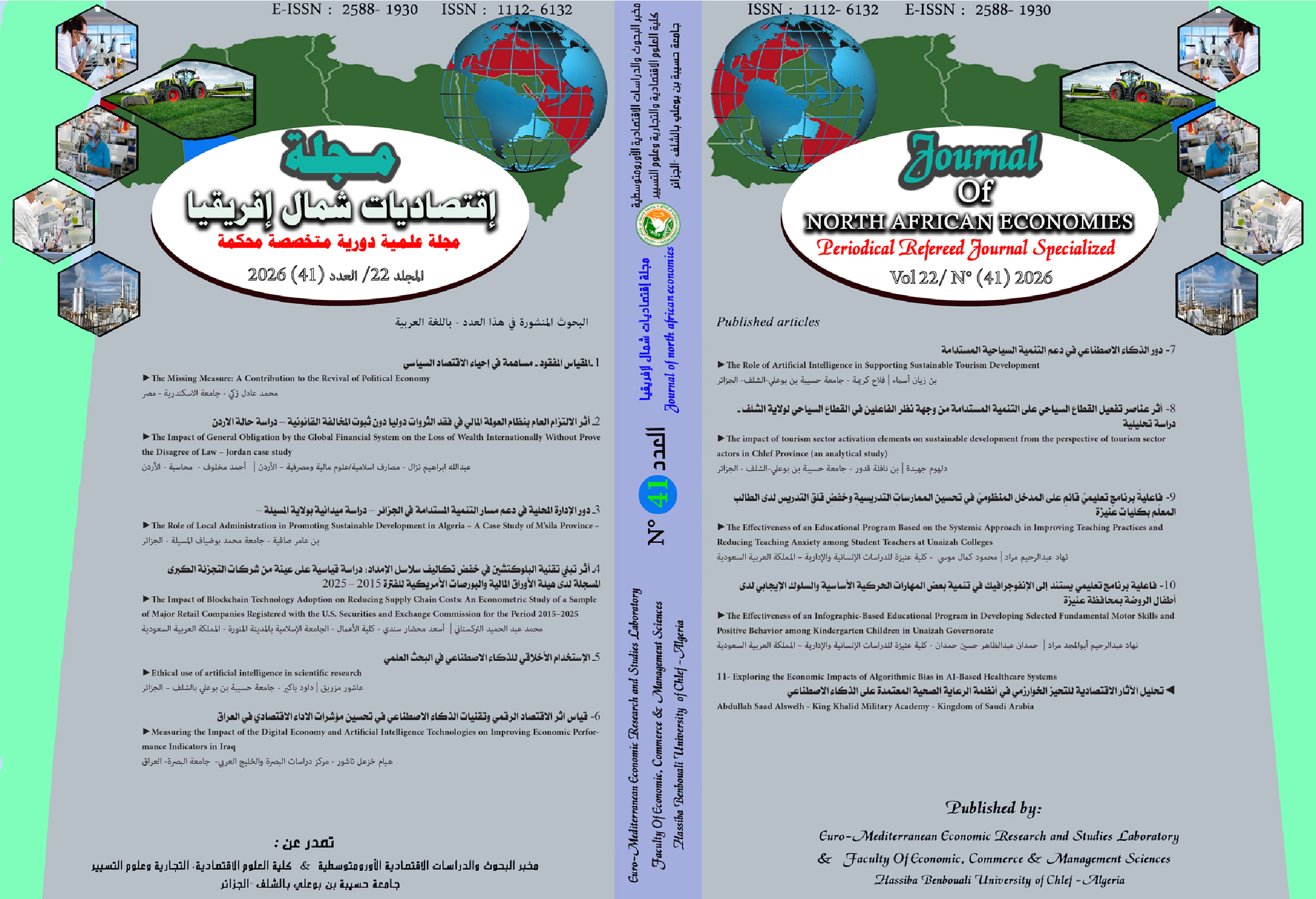
Editorial of Issue 41
The editorial board of the Journal of North African Economies is pleased to present to its esteemed readers the forty-first issue of the journal, which aims to enrich the scientific debate on current and future economic issues of concern to the region and the world. The journal continues its diligent efforts to be a leading platform for original economic research addressing the challenges and opportunities in North Africa, while remaining open to Arab and international experiences.
This issue is distinguished by the diversity and richness of its topics, which reflect major economic transformations and their impacts at the local, regional, and international levels. In the context of rethinking the theoretical foundations of economics, one of the papers makes a valuable contribution to the revival of political economy, calling for a deeper understanding of the relationships between economic and social forces. The issue also addresses an important study on the impact of public commitment to the global financial system on international wealth loss, focusing on the case of Jordan, thereby opening horizons for debate on the governance of global financial systems.
The journal pays special attention to sustainable development issues and the role of local institutions in achieving them. In this issue, we find in-depth analytical studies on the role of local administration in supporting the sustainable development path in Algeria, specifically in the province of M'Sila, as well as an analysis of the impact of activating the tourism sector on sustainable development from the perspective of stakeholders in the province of Chlef. This research highlights the importance of local planning and community participation in building a sustainable economic future.
Digital transformation and artificial intelligence constitute a prominent focus of this issue, with several studies exploring the dimensions of this technological revolution. From analyzing the impact of adopting blockchain technology on reducing supply chain costs, to measuring the impact of the digital economy and AI technologies on improving economic performance indicators in Iraq. The issue also addresses the ethical use of artificial intelligence in scientific research and its role in supporting sustainable tourism development, along with a study on the economic effects of algorithmic bias in AI-based systems. These articles provide multifaceted insights into how to harness technology to serve economic development while considering ethical and social dimensions.
Recognizing the importance of human capital in achieving comprehensive development, the issue also includes studies in the educational field, such as the effectiveness of educational programs based on the systemic approach and infographics in improving teaching practices and developing basic skills. This research underscores the interconnection between the quality of education and economic progress.
The editorial board extends its sincere thanks and appreciation to all the researchers who contributed their valuable work to enriching this issue, and to the reviewers who made considerable efforts to ensure the quality of the scientific content. We invite our esteemed readers to engage with this research and exchange opinions, believing that constructive scientific dialogue is the best way to enhance knowledge and drive development in our region.
With sincere appreciation,
Editor-in-Chief: Prof. Dr. Mohamed Ratoul
11/06/2026
منشور:
2026-06-13
إصدار كامل
Articles
Publication languages: Arabic, English and French.
The nature of the release: paper and electronic. (The Journal does not give the researcher a hard copy, and the researcher can print a copy or the Journal. (Completely on his account from the electronic version on the site without the need for permission from the magazine).
Electronic management: the Algerian platform for scientific journals ASJP
https://www.asjp.cerist.dz/en/PresentationRevue/9
|
Year of establishment: 2004. 2025 indicators: Acceptance rate: 64%. Average publication time after acceptance: 159 days. ASJP platform impact factor: 1.1505. Arab ARCIF impact factor for 2021: 0.6120, ranking third in the Arab world in economics among 93 journals in the Arab world. 2024 ARCIF ranking: Q1 category. Link: http://emarefa.net/arcif/ar/criteria African platform AJOL classification for the journal: Two diamonds out of three. Link : https://www.ajol.info/index.php/jnae The journal is present on several other Arab and international databases, including: ISI - AJOL - ASCI - ORCID - ASKZAD - SHAMAA - DAR ALMANDUMAH - JIF - SIS - DFAJ - ARCIF - Google Scholar - EBSC |