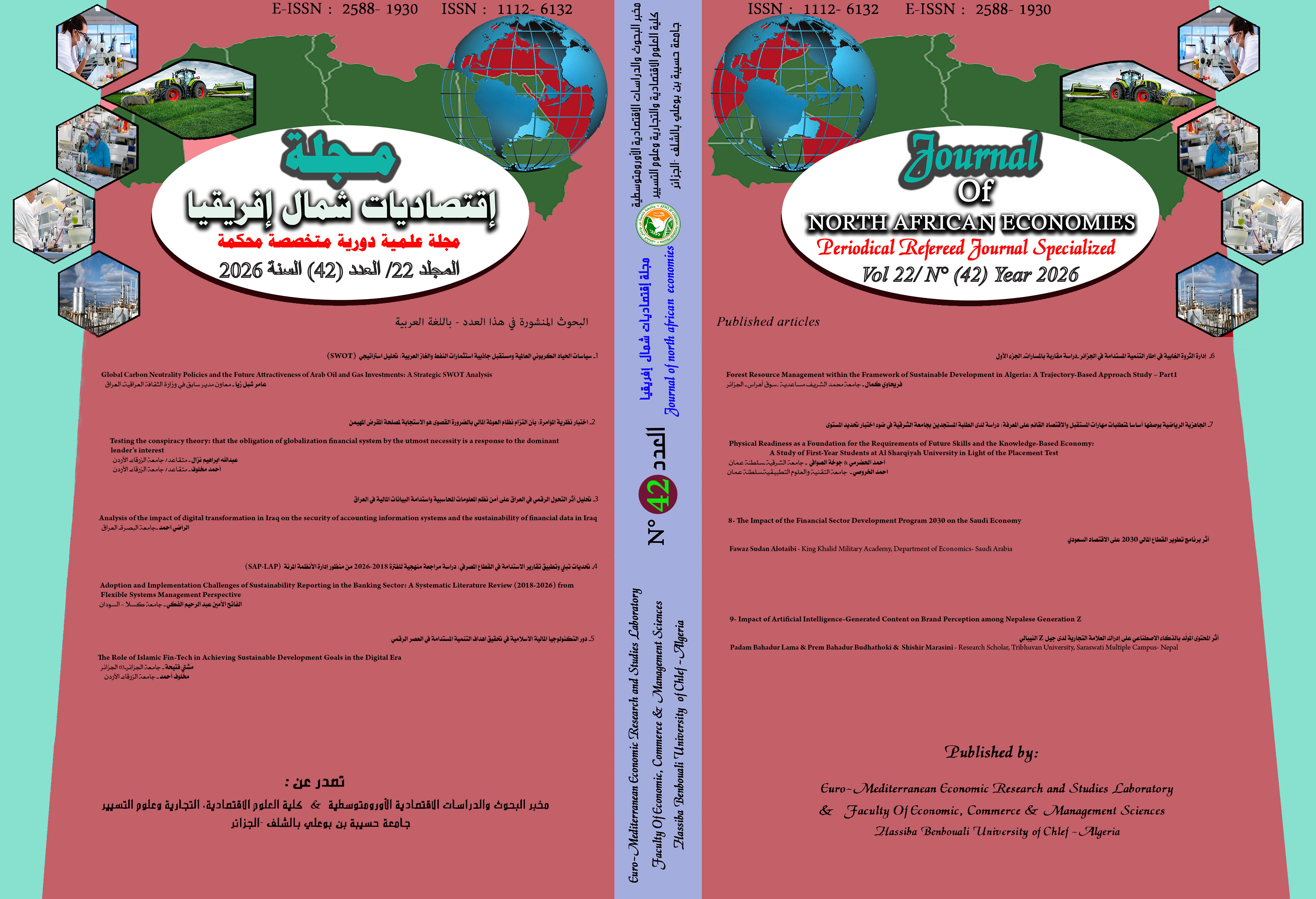
Vol. 22 No 42 (2026): Journal Of North African Economies
افتتاحية العدد 42
بسم الله الرحمن الرحيم
في ظل التحولات الاقتصادية والتكنولوجية والبيئية المتسارعة التي يشهدها العالم، وما تفرضه من تحديات على الاقتصادات الوطنية والدولية، تبرز أهمية البحث العلمي في تحليل هذه التحولات واستشراف آثارها، وتقديم رؤى ومقاربات تسهم في فهم الإشكالات الاقتصادية والتنموية ومعالجتها.
وفي هذا السياق، تضع مجلة اقتصاديات شمال إفريقيا بين أيدي قرائها العدد الثاني والأربعين من مجلدها الثاني والعشرين، متضمناً مجموعة من البحوث العلمية التي تعكس تنوعاً في الموضوعات وتعدداً في المقاربات، وتتناول قضايا اقتصادية ومالية وتنموية معاصرة، بمساهمات بحثية من عدد من الجامعات والمؤسسات العلمية العربية والدولية.
وتتوزع موضوعات هذا العدد على محاور متعددة، في مقدمتها التحولات التي يشهدها الاقتصاد العالمي، من خلال دراسة انعكاسات سياسات الحياد الكربوني على مستقبل الاستثمارات العربية في قطاعي النفط والغاز، وتحليل طبيعة الالتزامات التي يفرضها نظام العولمة المالية وعلاقتها بمصالح المقرض المهيمن. كما يحظى التحول الرقمي باهتمام خاص، من خلال بحث أثره على أمن نظم المعلومات المحاسبية واستدامة البيانات المالية، إلى جانب دراسة دور التكنولوجيا المالية الإسلامية في دعم أهداف التنمية المستدامة.
وفي سياق متصل، يتناول العدد قضايا الاستدامة المؤسسية والبيئية، من خلال بحث تحديات تبني تقارير الاستدامة في القطاع المصرفي، ودراسة إدارة الثروة الغابية في الجزائر ضمن إطار التنمية المستدامة. كما يمتد الاهتمام إلى تنمية رأس المال البشري ومتطلبات الاقتصاد القائم على المعرفة، من خلال دراسة الجاهزية الرياضية وعلاقتها بمهارات المستقبل لدى الطلبة الجامعيين.
وتعزيزاً للبعد الدولي للمجلة، يتضمن العدد أيضاً مساهمتين علميتين باللغة الإنجليزية، تتناول الأولى أثر برنامج تطوير القطاع المالي 2030 على الاقتصاد السعودي، بينما تبحث الثانية تأثير المحتوى المولّد بالذكاء الاصطناعي على إدراك العلامة التجارية لدى جيل Z في دولة نيبال.
إن تنوع هذه الموضوعات وتكاملها يعكسان اتساع مجالات البحث الاقتصادي المعاصر، وتزايد الترابط بين القضايا المالية والتكنولوجية والبيئية والتنموية، كما يؤكدان أهمية المقاربات متعددة التخصصات في فهم التحولات الراهنة واستشراف آفاقها المستقبلية.
وفي الختام، تتقدم هيئة تحرير المجلة بخالص الشكر والتقدير إلى الباحثين المساهمين في هذا العدد، وإلى السادة المحكمين وكل من أسهم في إنجازه وإخراجه، آملين أن تشكل هذه البحوث إضافة علمية نوعية، وأن تسهم في إثراء النقاش الأكاديمي وتعزيز البحث العلمي في مجال الاقتصاد والعلوم ذات الصلة.
والله ولي التوفيق.
الشلف في: 11/11/2026
رئيس هيئة التحرير: أ.د/ محمد راتول
Editorial – Issue 42In the Name of Allah, the Most Gracious, the Most Merciful
In light of the rapid economic, technological, and environmental transformations taking place across the world, and the challenges they pose to national and international economies, scientific research assumes increasing importance in analyzing these transformations, anticipating their implications, and providing insights and approaches that contribute to understanding and addressing economic and developmental issues.
In this context, the Journal of North African Economies is pleased to present to its readers the forty-second issue of Volume 22, featuring a collection of scholarly contributions that reflect a diversity of topics and research approaches. The articles address contemporary economic, financial, and developmental issues, with contributions from several Arab and international universities and academic institutions.
The themes covered in this issue span several areas, foremost among them the transformations taking place in the global economy. These include an examination of the implications of global carbon neutrality policies for the future of Arab investments in the oil and gas sectors, as well as an analysis of the nature of the obligations imposed by the global financial system and their relationship with the interests of dominant lenders. Particular attention is also given to digital transformation through research into its impact on the security of accounting information systems and the sustainability of financial data, alongside an examination of the role of Islamic financial technology in advancing the Sustainable Development Goals.
In a related context, this issue addresses institutional and environmental sustainability through research on the challenges of adopting sustainability reporting in the banking sector and the management of forest resources in Algeria within the framework of sustainable development. Attention also extends to human capital development and the requirements of the knowledge-based economy, through a study examining physical readiness and its relationship with future skills among university students.
Further strengthening the journal's international dimension, this issue also includes two scholarly contributions in English. The first examines the impact of the Financial Sector Development Program 2030 on the Saudi economy, while the second explores the impact of artificial intelligence-generated content on brand perception among Generation Z in Nepal.
The diversity and complementarity of these topics reflect the expanding scope of contemporary economic research and the growing interconnection between financial, technological, environmental, and developmental issues. They also underscore the importance of interdisciplinary approaches in understanding current transformations and anticipating their future prospects.
Finally, the Editorial Board extends its sincere appreciation to all researchers who contributed to this issue, to the distinguished reviewers, and to everyone who participated in its preparation and publication. It is our hope that these studies will constitute a valuable scholarly contribution, enrich academic debate, and promote scientific research in economics and related disciplines.
May Allah grant us success and guidance.
Chlef, November 11, 2026
Editor-in-Chief: Prof. Mohamed RATOUL
Publiée:
2026-11-11